

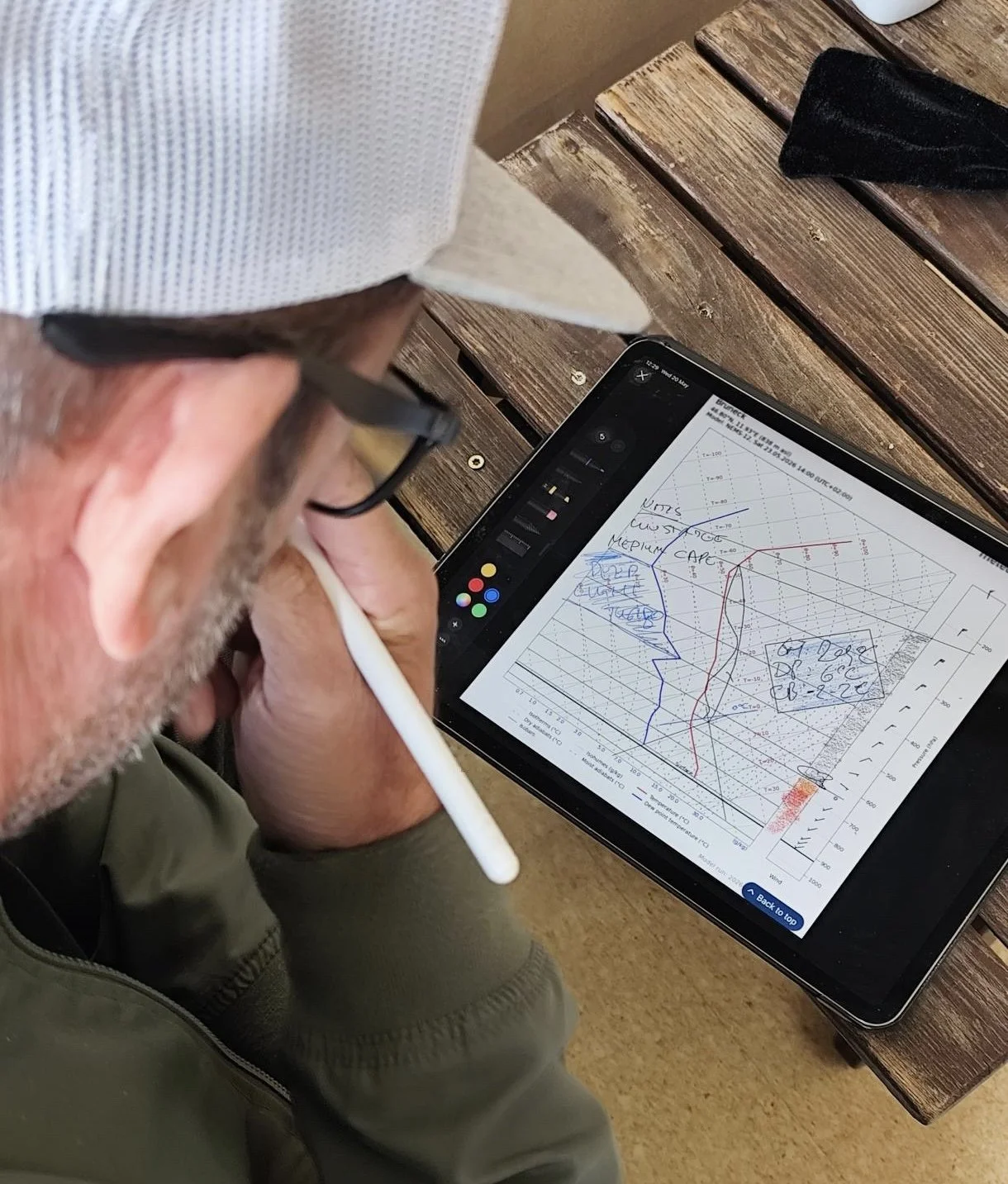
Skew-t workshops
6th & 7TH November, 2026
19:00 (UTC ) - via zoom
Understand more. Fly further.
Join our online skew-t workshops
We aim to make the complicated understandable, without making the learning feel complicated.
Our online Skew-T workshops break down the ‘black art’ of meteorology into practical, bite-sized concepts you can apply to your flying.
Each two-hour workshop is limited to just 8 pilots, allowing plenty of time for questions, chart analysis and practical exercises.
No prior knowledge necessary — just curiosity.
LEVEL 1 — THE FOUNDATIONS
£150 per person
Learn the basics of how to read, plot and understand the day.
● Understand the Skew-T plot and how to read it.
● Recognise the key atmospheric profile characteristics.
● Understand temperature gradients and their implications for thermal development.
● Learn to interpret the chart and build a picture of the day’s potential.
LEVEL 2 — THE ADVANCED WORKSHOP
£100 per person
Take your understanding further.
● Explore density and the influence of the dew-point profile.
● Understand weather flow and its implications for flying conditions.
● Combine atmospheric characteristics to build a more complete picture.
● Develop a structured approach to making more reliable predictions.
Level 1 is recommended before attending Level 2.
Apply for details.
-
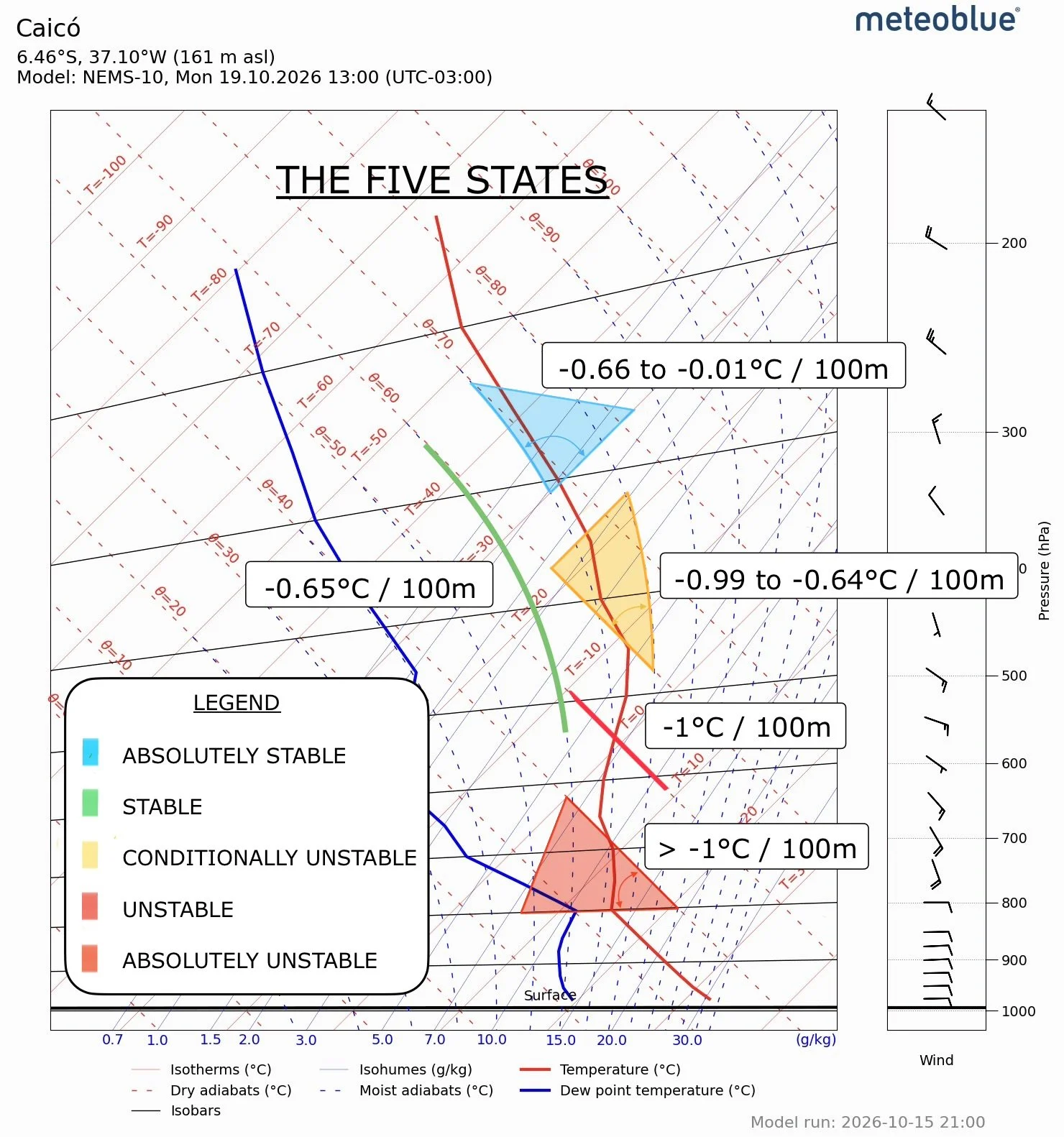
The fundamentals
It’s all about the basics, we cover the myriad of confusing lines. Digging out the constants, the data and explain the states of the atmosphere.
Including what they mean and why we care. You’ll learn how to read them.
This is the bedrock of charting.
-
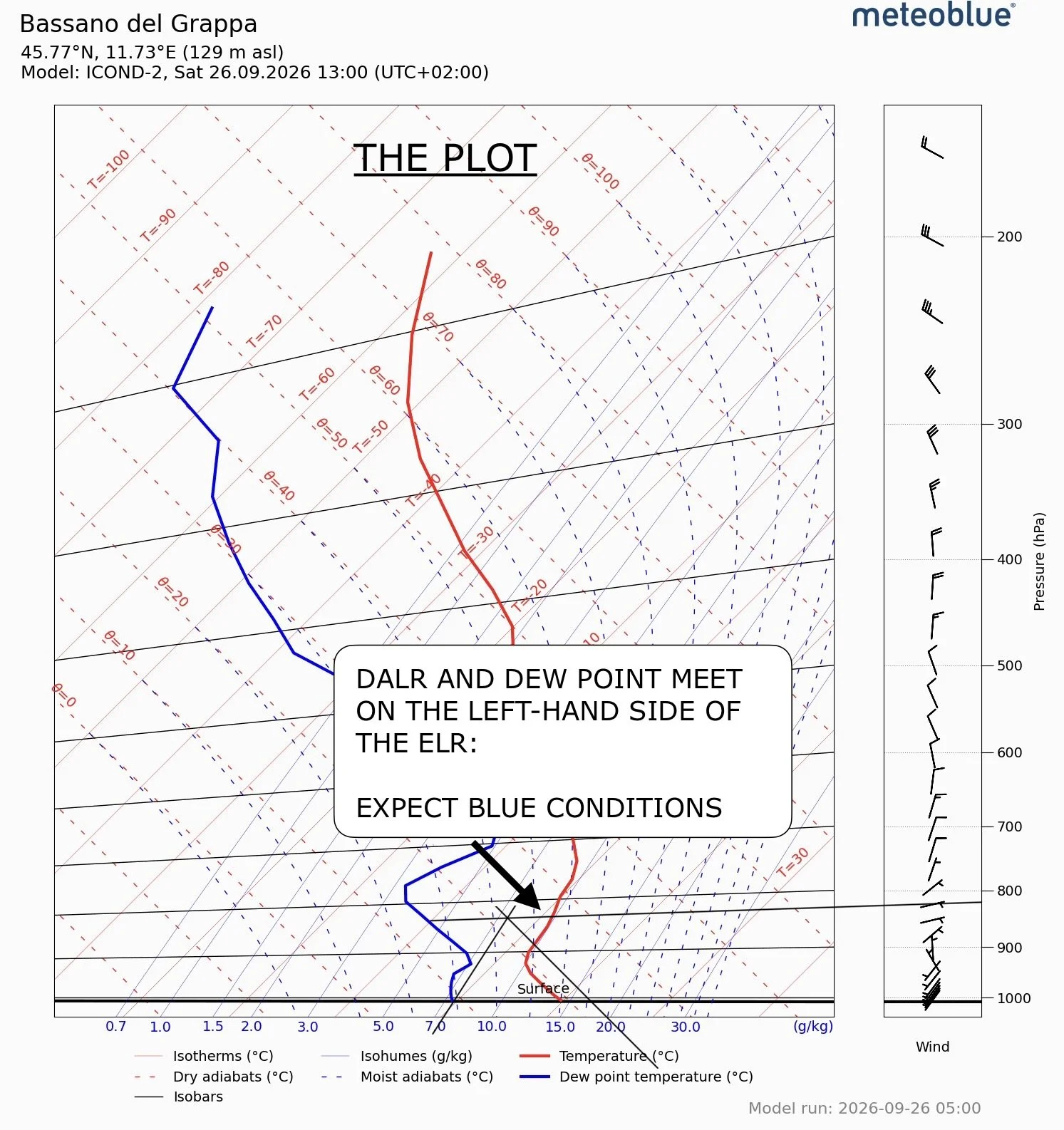
Precision plotting
With the chart understood we can move on how to plot, along which line, and more importantly why.
Building the information as we go.
We’ll soon have an extensive picture of the day in question.
As well as knowing any slow layers, and even how likely spread out will be.
-
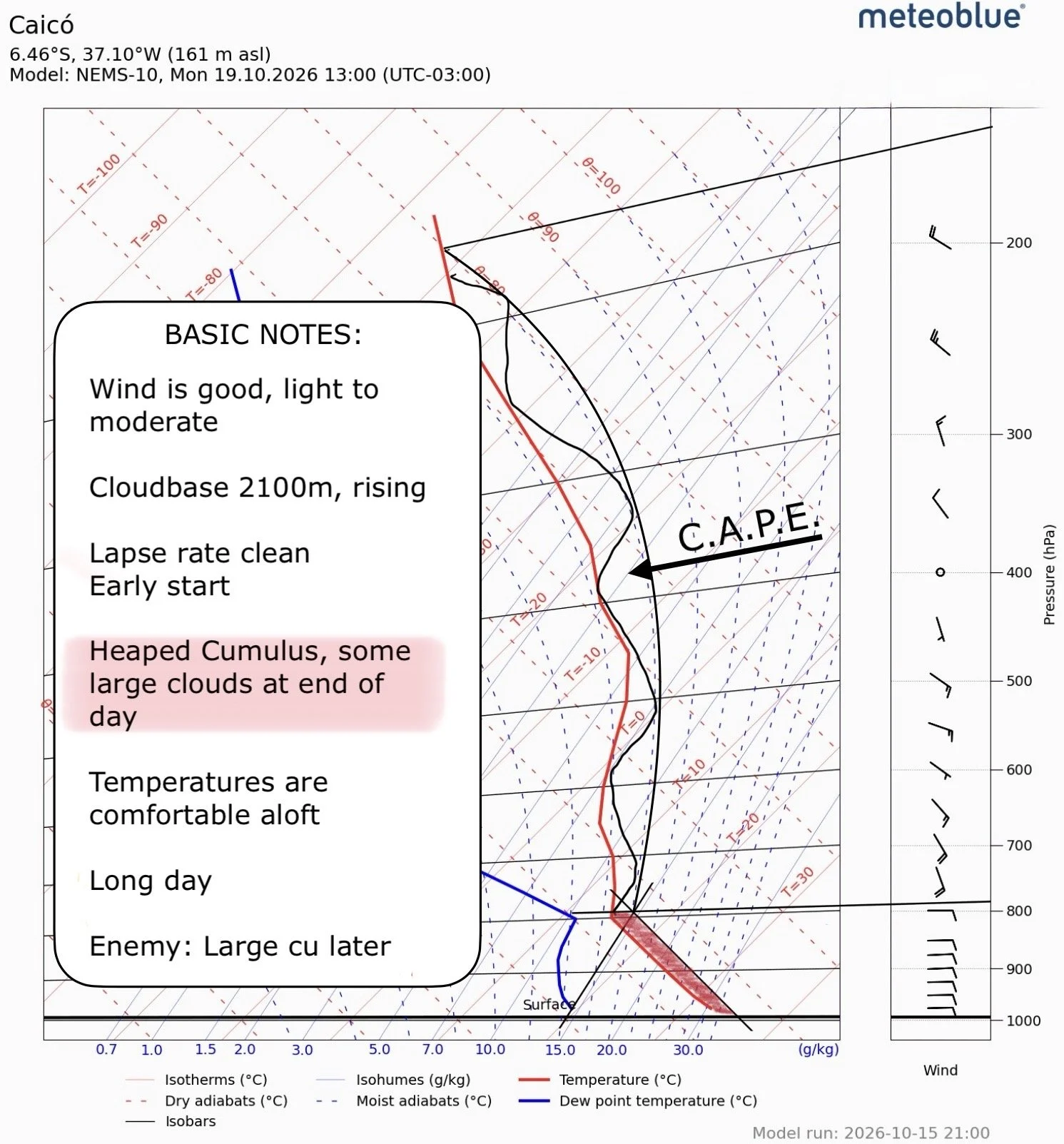
In the wild
Once we take a deep dive into the profiles we can start to imagine how the day will develop.
Making our notes, in regards to day length, cloudbase, start times and temperature aloft clearly marked.
At the end expect a quiz to test what you now understand.